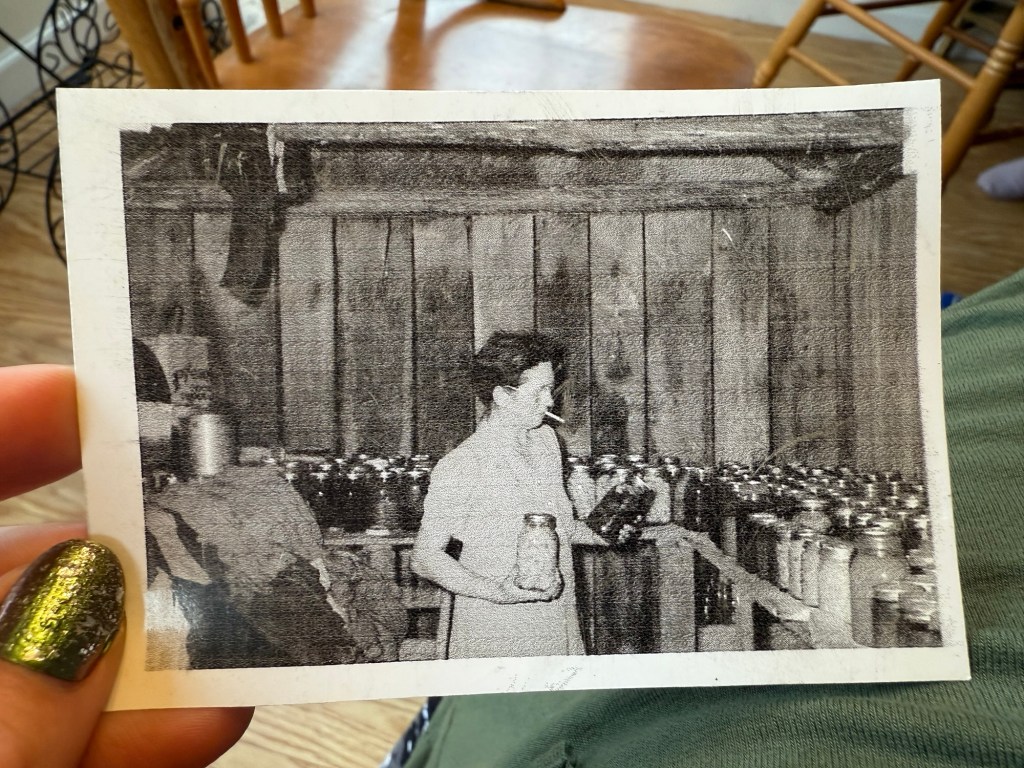
Things were different back then, and I think we have lost some important personal character during the Industrial Revolution and into our digital age of The Postmodern Era. I personally love the FoxFire books. Have you ever heard of them?
The Foxfire books are a series of books that document traditional Appalachian culture, crafts, and ways of life. They began as a magazine project in the 1960s and became widely influential for preserving folk knowledge. It’s always seemed logical to me that we stay remembering how to care for ourselves outside of the corporations and amenities provided to us. Consider: how many people today feel they are being poisoned through various lifestyle habits of today? Here are these values that speak to me.

1. Self-reliance paired with community
They were fiercely independent, yet no one survived alone. People learned skills so they wouldn’t be a burden. They showed up for neighbors because next time, it might be them.
Appalachia’s mountains created isolation. Families survived by relying on themselves and their kin, not institutions. Self-sufficiency wasn’t a personality trait, it was a survival skill. Accepting outside help could feel like admitting failure to provide. Refusing help wasn’t arrogance; it was honor culture. Providing for your family, even in scarcity, was tied to moral worth. Being offered help could imply, “You aren’t capable,” which struck at personal dignity.
2. Use what you have, waste nothing
Scarcity shaped resourcefulness.
Tools were repaired, not replaced. Food scraps fed animals or soil. Clothing was patched until it became something else.
We were far removed from the gluttonous consumerism mentality of today!
3. Knowledge passed by story, not theory
Most learning was experiential and oral:
“This is how my daddy did it”, “I tried it that way once and nearly died”.
Wisdom sticks when it’s tied to lived consequence. When being told by someone who is standing in front of you and speaking with their eyes.
4. Endurance without complaint
Suffering wasn’t glorified, but it wasn’t dramatized either. Illness, loss, hunger, cold were faced plainly. Faith and humor often coexisted with hardship. Quiet perseverance builds a deeper resilience than constant outrage.
Many Appalachian communities held a strong belief in enduring hardship quietly, trusting God rather than institutions. Suffering wasn’t always something to be fixed; it was sometimes understood as something to be borne with grace.
5. Faith woven into daily life
Religion wasn’t abstract—it was practical.
Prayer before work, childbirth, illness. Scripture was remembered, not debated endlessly.
Belief becomes strongest when it’s lived, not argued.
6. Respect for natural rhythms
They lived by:
Weather signs
Seasons
The body’s limits
Pushing against nature meant real consequences.
Modern burnout often comes from ignoring human and natural limits.
7. Dignity without status
Worth wasn’t measured by wealth or polish.
A man was known by his word.
A woman by her steadiness and skill.
Children by how they carried responsibility.
Character outlasts reputation.
8. Children were capable, not coddled
Children worked, learned skills early, and were trusted.
Children worked early, not as punishment, but as preparation. They were trusted with real responsibility and learned confidence through contribution.
Today, children are often either overprotected or overstimulated, leaving them anxious and unsure of their usefulness.
Responsibility, when paired with love, creates confidence.
9. Silence and solitude were normal
Entertainment was scarce. People used to spend long evenings with little entertainment, plenty of quiet, and much reflection. Silence wasn’t empty-it was fertile.
Modern life avoids silence at all costs, filling every gap with noise, content, and distraction. We ignore now- what grows in the stillness that is obtained through long stretches of quiet thinking, working, or walking.
The inner life grows when it isn’t constantly stimulated. Also, take a moment to imagine how extra beautiful music would sound to you, if you only heard it every so often, when someone decided to make it. When it was actually near you, vibrations and all.
10. Life was sacred because it was fragile
Birth, death, and illness happened at home.
This created reverence, not fear. Grief was communal, not hidden.
Facing mortality honestly deepens gratitude for living.
 Holistic Woman
Leave a comment